“`html
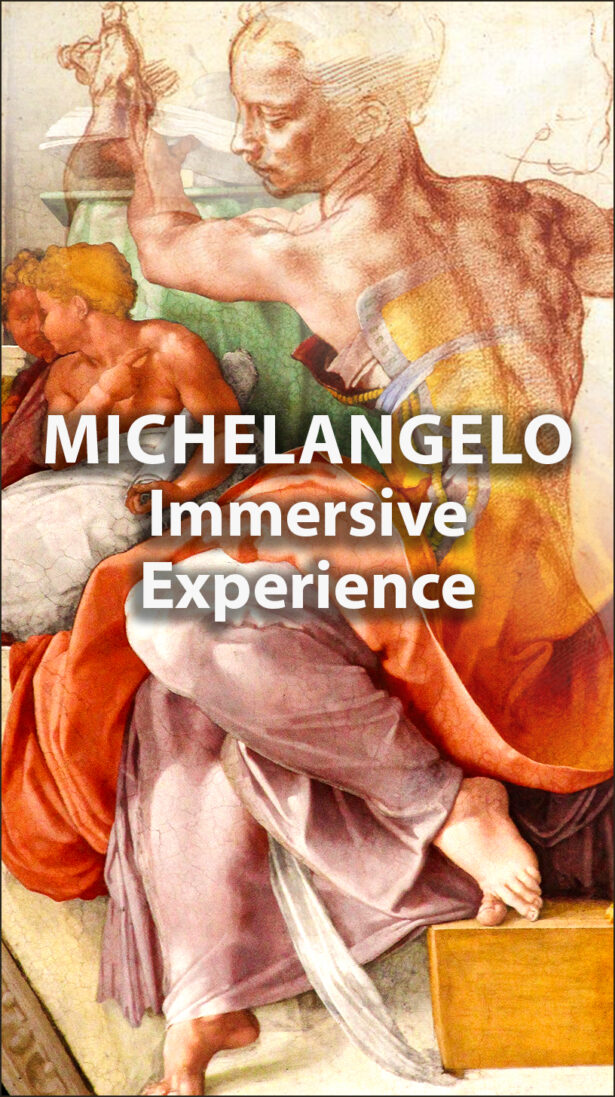
An immersive 3-D tour of Michelangelo’s Masterpieces
Step into the world of the Italian Renaissance through an immersive
three-dimensional tour of Michelangelo’s greatest masterpieces. This short
documentary brings viewers closer to the sculpture, painting and architecture
of an artist whose work continues to inspire awe more than five centuries
after it was created.
The video explores the monumental David, the emotional beauty of the
Pietà, the commanding figure of Moses and the extraordinary
frescoes of the Sistine Chapel. Original photography, historical imagery,
music and 3-D presentation help reveal details that can be difficult to
appreciate from photographs alone.
Who Was Michelangelo?
Michelangelo di Lodovico Buonarroti Simoni was born on March 6, 1475, in
Caprese, a Tuscan settlement now known as Caprese Michelangelo. Although he
became one of history’s most celebrated painters and architects, Michelangelo
considered sculpture his primary art.
His family returned to Florence while he was still young. As a teenager,
Michelangelo entered the workshop of the painter Domenico Ghirlandaio and
later studied sculpture among the antiquities collected by the Medici family.
His understanding of the human body, classical art and marble carving soon
distinguished him from his contemporaries.
Michelangelo worked during the High Renaissance and lived through periods of
political upheaval, war and religious change. His long career took him from
Florence to Bologna and Rome, where he created works for powerful patrons,
including members of the Medici family and several popes.
Michelangelo’s Most Famous Masterpieces
David
Michelangelo carved David from a massive block of Carrara marble
between 1501 and 1504. The figure represents the biblical hero before his
battle with Goliath, alert and prepared rather than triumphant after the
victory.
Including its carved base, the statue stands approximately 5.17 meters, or
nearly 17 feet, high. It was originally displayed outside Florence’s Palazzo
della Signoria as a symbol of the republic’s courage and independence. The
original sculpture is now housed in the Galleria dell’Accademia in Florence.
The Pietà
Michelangelo created the Vatican Pietà while still in his early
twenties. Carved from Carrara marble, it portrays the Virgin Mary holding the
body of Christ after the Crucifixion.
The sculpture combines profound grief with extraordinary technical control.
Michelangelo polished the marble so carefully that the stone appears to
become skin, cloth and flesh. The work is displayed in Saint Peter’s Basilica
in Vatican City and is the only sculpture Michelangelo is known to have
signed.
Moses
Michelangelo’s commanding statue of Moses was created as part of the
ambitious tomb commissioned by Pope Julius II. The seated figure appears
powerful and intensely alert, with muscular arms, flowing drapery and a
dramatic beard carved from marble.
The unusual horns on the figure’s head came from a traditional Latin
translation of the biblical description of rays of light shining from
Moses’s face. The sculpture can be seen in the Basilica of San Pietro in
Vincoli in Rome.
The Sistine Chapel Ceiling
Pope Julius II commissioned Michelangelo to paint the ceiling of the Sistine
Chapel in 1508. Michelangelo had limited experience with large-scale fresco
painting and regarded himself primarily as a sculptor, but he accepted the
enormous assignment.
Working on elevated scaffolding, Michelangelo covered the ceiling with
hundreds of figures and scenes from the Book of Genesis. Among the best-known
images are The Creation of Adam, The Creation of Eve and
scenes depicting Noah.
The project was completed in 1512. More than two decades later, Michelangelo
returned to the chapel to paint The Last Judgment on the altar wall.
Together, these frescoes transformed the Sistine Chapel into one of the most
recognizable artistic spaces in the world.
Michelangelo the Sculptor, Painter, Architect and Poet
Michelangelo’s achievements extended far beyond individual statues and
frescoes. He designed the Laurentian Library in Florence, worked on the Medici
Chapel and became chief architect of Saint Peter’s Basilica in Rome.
His architectural work helped shape the appearance of Saint Peter’s,
particularly the design of its great dome. Although the dome was completed
after his death, later architects followed the essential form of
Michelangelo’s design.
Michelangelo was also a poet. Hundreds of his poems and poetic fragments
survive, exploring faith, love, artistic struggle, aging and mortality. His
writing offers a personal counterpart to the physical strength and confidence
expressed by his monumental figures.
Michelangelo’s Final Years
Michelangelo remained creatively active into old age. One of his final
sculptures was the Rondanini Pietà, an unfinished and deeply
expressive representation of Mary supporting the body of Christ.
He continued revising the sculpture shortly before his death in Rome on
February 18, 1564. Michelangelo was 88 years old and only a few weeks away
from his eighty-ninth birthday.
Although authorities in Rome planned to bury him there, Michelangelo’s body
was taken back to Florence. He was ultimately buried in the Basilica of Santa
Croce, where his tomb celebrates painting, sculpture and architecture—the
three arts in which he achieved lasting fame.
Seeing Michelangelo’s Art in Person
Photographs can document the scale and appearance of Michelangelo’s work, but
they rarely reproduce the experience of standing before it. From the height
of David to the immense painted surface of the Sistine Chapel, the
physical presence of these works is central to their effect.
I took hundreds of photographs while traveling through Florence and Rome, but
none fully captured the experience of seeing the originals. Visitors approach
these figures carved from stone and marvel at how alive they appear. For a
moment, the marble seems to become human while the people viewing it become
like statues—standing motionless in awe.
This video was created to bring viewers closer to that experience. Its
photography, three-dimensional scenes, editing and original song are designed
to move with the artwork and reveal the emotion, scale and detail of
Michelangelo’s creations.
Frequently Asked Questions About Michelangelo
Where was Michelangelo born?
Michelangelo was born on March 6, 1475, in Caprese, a hill town in Tuscany
near Arezzo. The community is now called Caprese Michelangelo in recognition
of its famous native son.
His traditional birthplace is preserved as part of the Museo Casa Natale di
Michelangelo Buonarroti, or Michelangelo Birthplace Museum. The museum
occupies buildings associated with the local government official’s
residence where Michelangelo’s father was serving when his son was born.
What was Michelangelo’s full name?
His full name was Michelangelo di Lodovico Buonarroti Simoni. He is normally
known simply as Michelangelo, a level of recognition shared by only a small
number of artists in history.
Was Michelangelo primarily a painter or a sculptor?
Michelangelo worked as a sculptor, painter, architect and poet, but he
considered himself primarily a sculptor. Even his painted figures often
possess the weight, anatomy and three-dimensional presence of monumental
sculpture.
How old was Michelangelo when he created the Pietà?
Michelangelo was approximately 23 when he received the commission and about
24 when the Vatican Pietà was completed. The sculpture established
his reputation in Rome while he was still a young artist.
Why is Michelangelo’s Pietà signed?
According to an early account, Michelangelo overheard viewers attributing
the work to another sculptor. He then carved his name across the sash on
Mary’s chest. It is the only sculpture Michelangelo is known to have signed.
How tall is Michelangelo’s David?
The sculpture and its carved base measure approximately 5.17 meters, or
nearly 17 feet, high. Its monumental scale is one reason photographs do not
fully communicate the experience of seeing the original.
Where is the original statue of David?
The original David is displayed in the Galleria dell’Accademia in
Florence. A marble replica stands near its original outdoor location at the
entrance to the Palazzo Vecchio in Piazza della Signoria.
Did Michelangelo paint the Sistine Chapel while lying on his back?
No. Michelangelo generally painted while standing on specially constructed
scaffolding beneath the ceiling. The work forced him to bend his neck and
body into uncomfortable positions, which he described humorously in a poem
about the physical strain of the project.
How long did it take Michelangelo to paint the Sistine Chapel ceiling?
Michelangelo worked on the Sistine Chapel ceiling from 1508 until 1512,
although the project included interruptions. The completed ceiling contains
hundreds of painted figures arranged across a complex architectural and
narrative design.
Did Michelangelo paint the entire Sistine Chapel?
No. Other important Renaissance artists decorated the chapel’s walls before
Michelangelo began the ceiling. Michelangelo painted the ceiling and later
created The Last Judgment on the altar wall.
Why does Michelangelo’s Moses have horns?
The horns reflect a historical translation of a biblical passage describing
Moses after he descended from Mount Sinai. The Hebrew text can refer to rays
of light, but the Latin translation used in Michelangelo’s era was
interpreted as describing horns.
What kind of marble did Michelangelo use?
Michelangelo frequently worked with Carrara marble quarried in the mountains
of Tuscany. He personally visited the quarrying regions and took an active
interest in selecting stone suitable for his sculptures.
What was Michelangelo’s last sculpture?
The unfinished Rondanini Pietà is generally regarded as
Michelangelo’s final sculpture. He continued changing its elongated and
simplified figures shortly before his death in 1564.
How old was Michelangelo when he died?
Michelangelo died on February 18, 1564, at the age of 88. He would have
turned 89 on March 6 of that year.
Where is Michelangelo buried?
Michelangelo is buried in the Basilica of Santa Croce in Florence. His
monumental tomb includes figures representing painting, sculpture and
architecture.
Michelangelo Song Lyrics
The original lyrics were written to accompany the artwork and reflect the
experience of seeing Michelangelo’s marble figures and frescoes in person.
Five hundred years
and still we gaze,Carved from solid rock,
the beauty made.Heroes in the fight,
heavenly delight.How could I know,
Michelangelo.Carrara marble
turns to flesh and bone.Coming alive
while turning me to stone.Pictures wasted there,
nothing can compare.How could I know,
Michelangelo.They’ll never understand
how God had touched your hand.The secret of
Michelangelo.
About This Michelangelo Documentary
Research, script, photography, artwork and video editing:
Jef Gray
Music: Aurous
Production: International Peace and Film Festival
Historical and stock imagery: Wikimedia Commons and other
appropriately licensed sources